
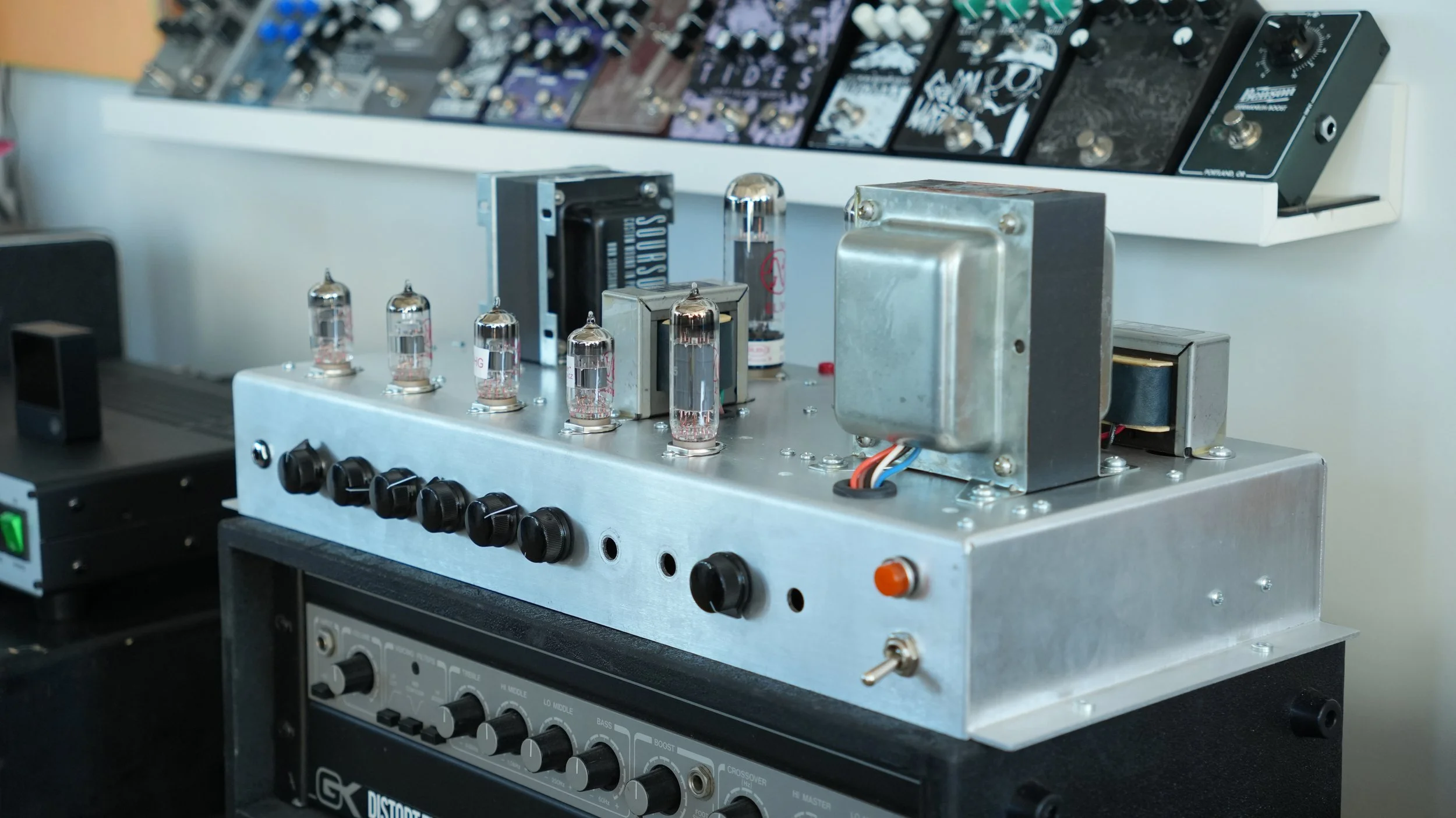
Before EAE made any pedals, I built an amp that I called the Arcanist. There is one prototype from 2014, and one production model that I built for a friend in 2016. The design had some cool ideas, but I had no idea how to scale it. Pedals are much more nimble, and there’s endless variety! But, I love amps, and it’s a space where I’ve always wanted to do more.
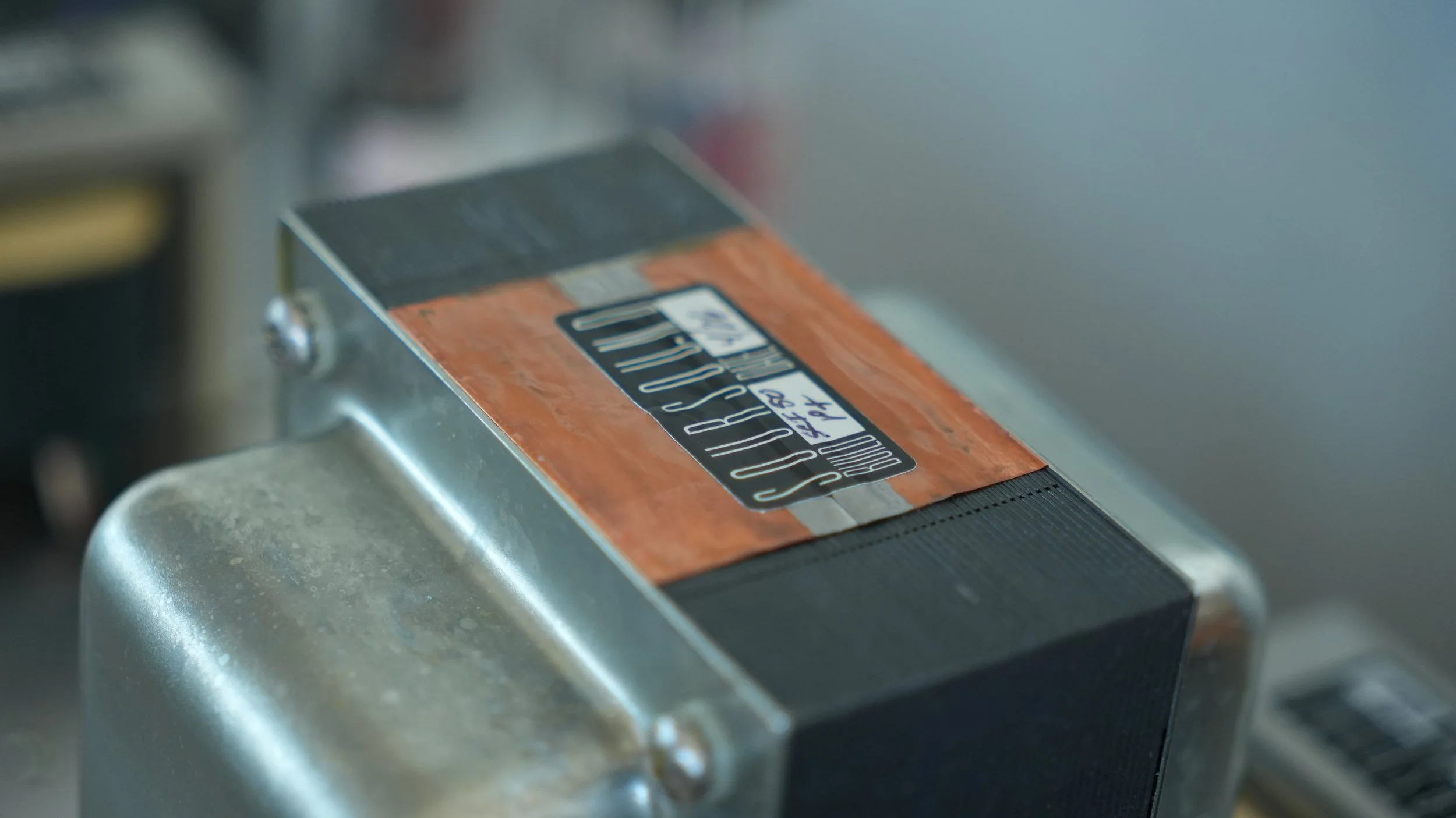
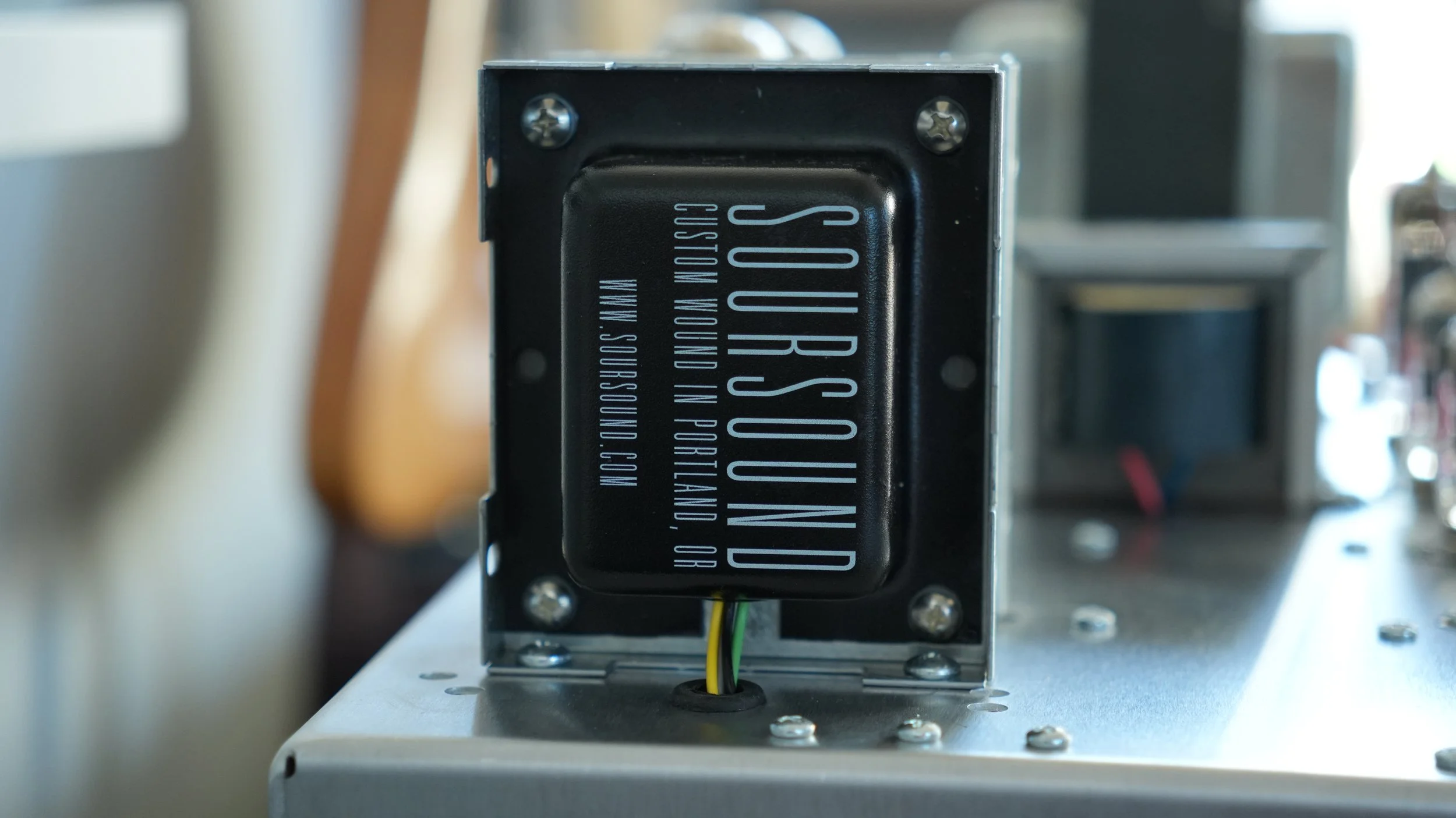
In the years since I wanted to revisit the idea, but I lacked the bandwidth and resources. Amp building requires access to supply chains that are pretty different from pedals. But then, I became friends with Alex at Science Amps! After developing the Mother preamp together, we have a really solid working relationship. Earlier this year, he pitched building a prototype EAE amp. I dug up my old simulations and enlisted our friend Bryan Sours to get deep into some unique transformer/inductor ideas. While the design concept is mine, it absolutely would not have been possible without their expertise and experience.
When I was in Portland for the PDX Stompbox Expo earlier this year, Alex had this prototype ready for me and we spent a couple days adjusting and voicing. Now, it’s here at our shop for me to continue listening and making further tweaks.
So, what is it?
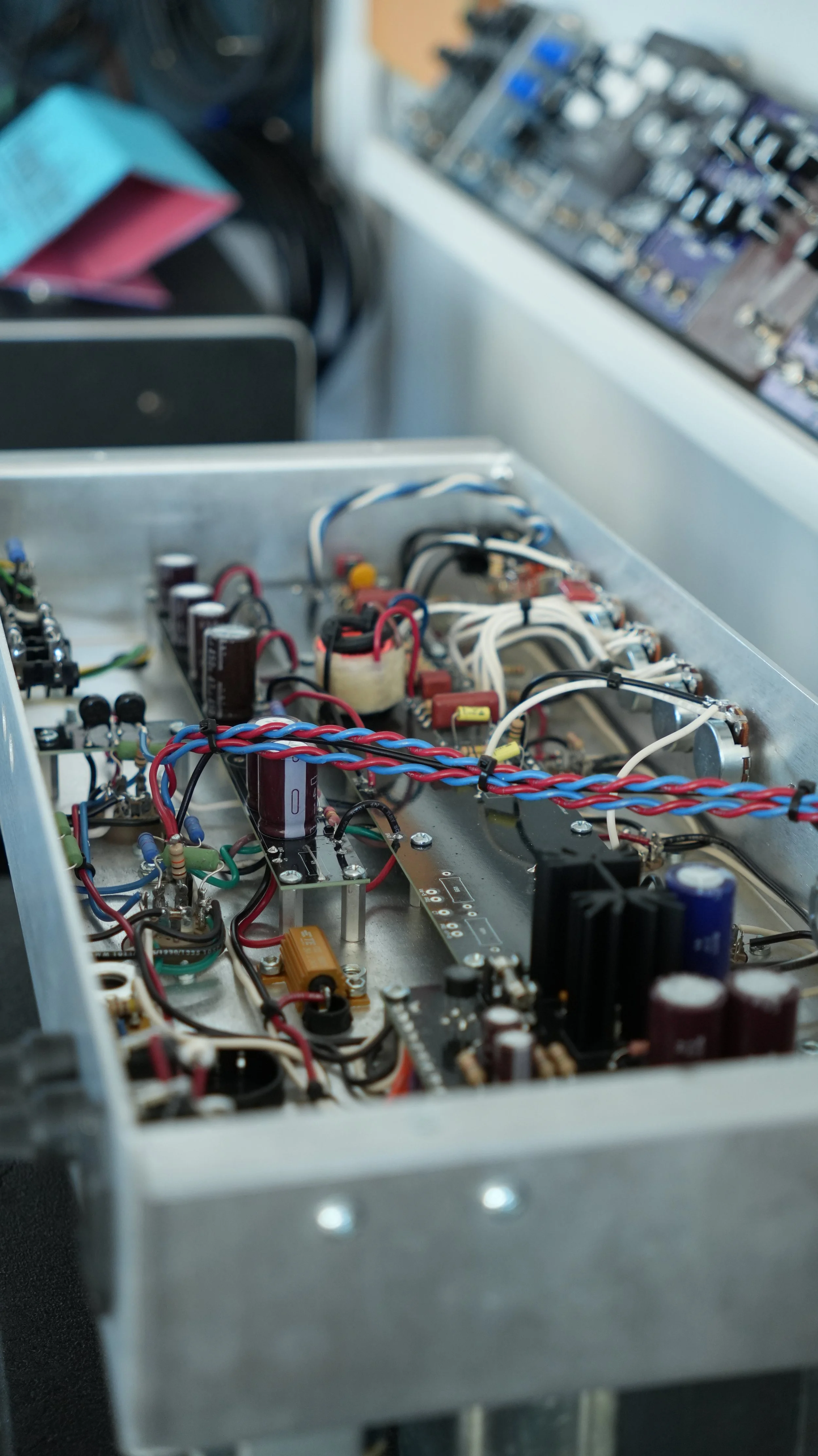
The Arcanist is a single channel amp, designed to be a clean pedal platform with clarity and heaviness. Here are some of the unique elements:
50W output using a pair of EL34s. Pretty no-nonsense. There is (as of right now) no negative feedback, in order to maintain dynamics.
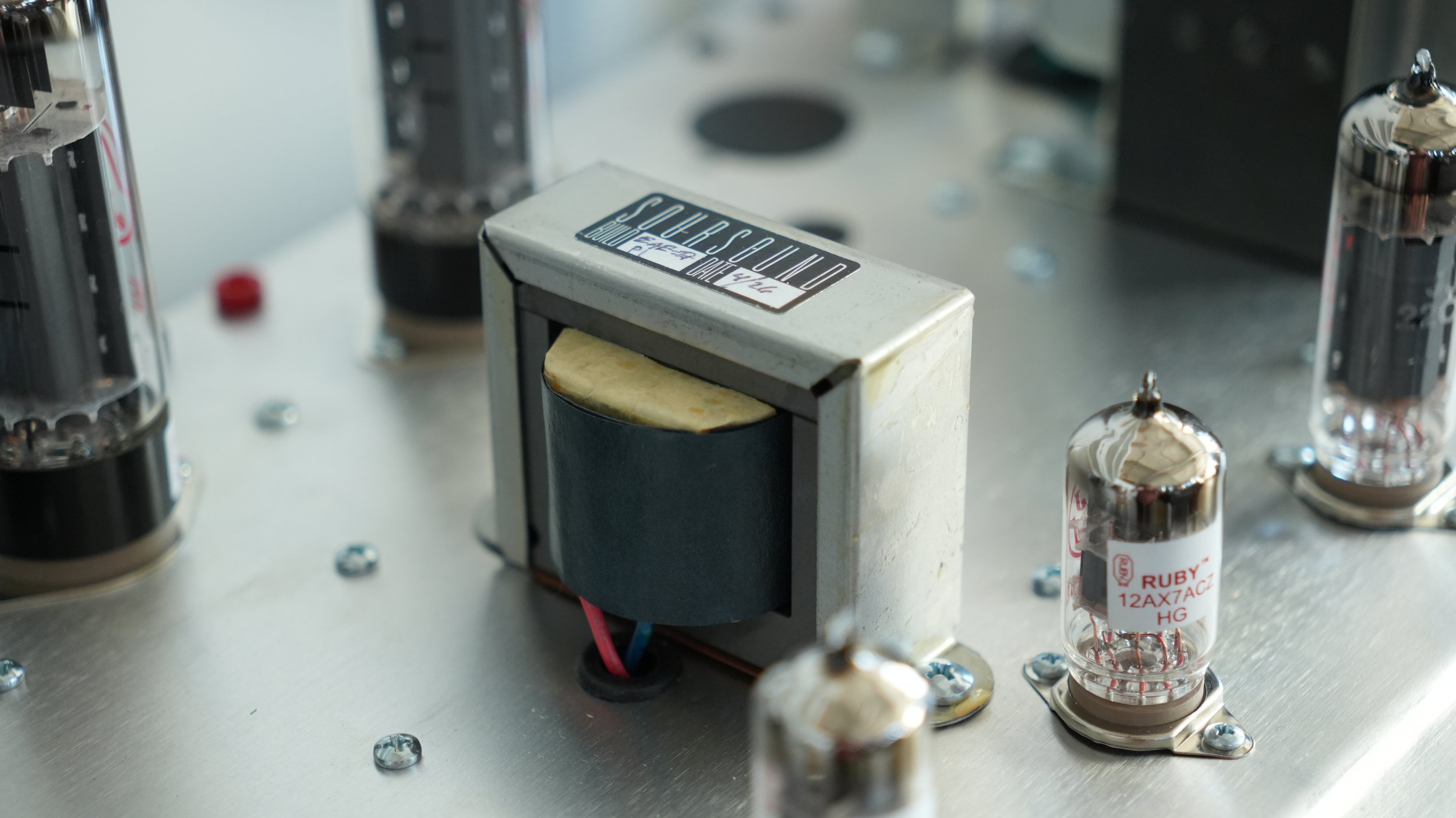
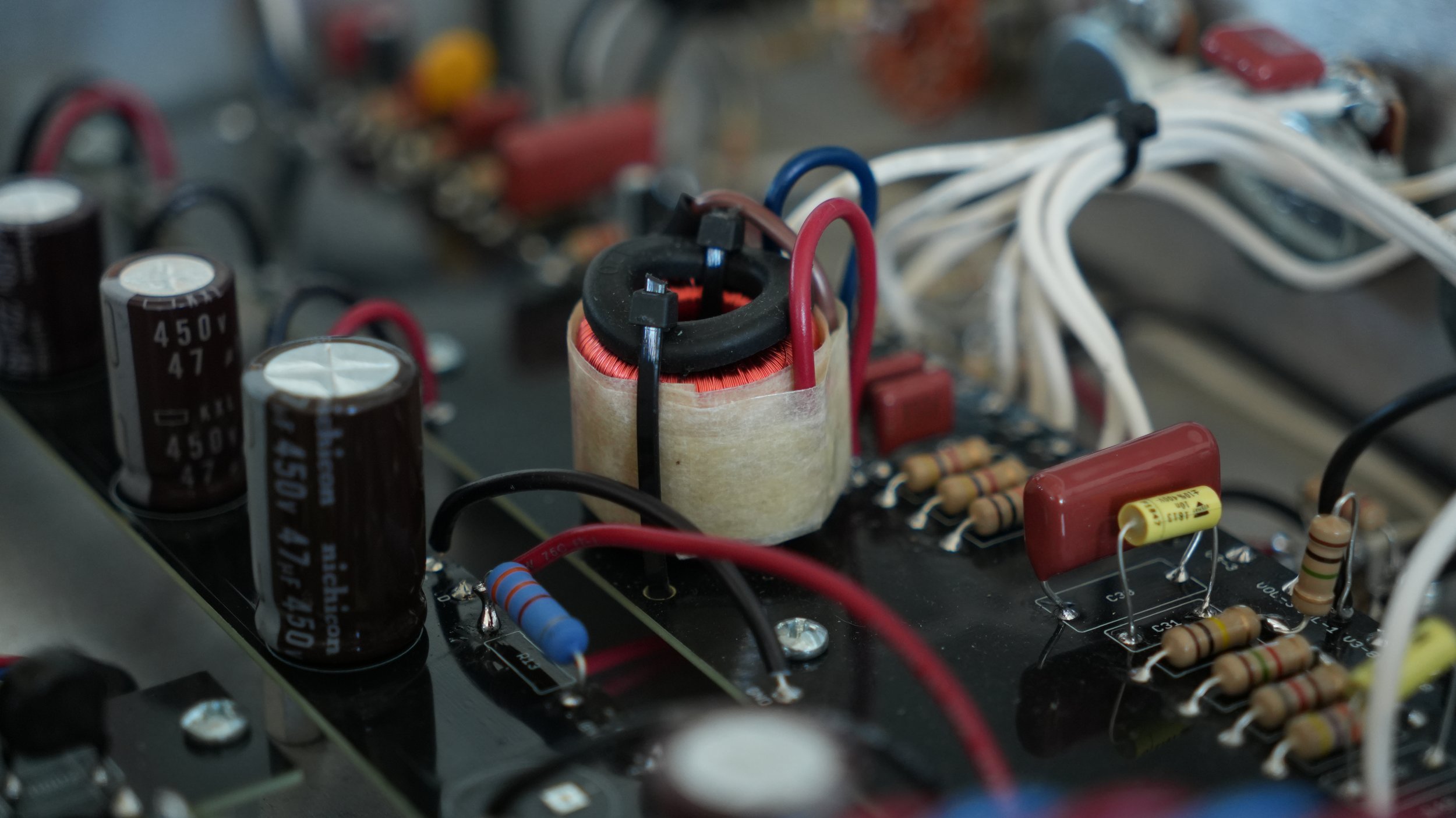
A tube-based active EQ, with a topology primarily inspired by solid-state gear. The mid band uses a custom-wound inductor.
A transformer-based phase splitter driven by an EL84. While it seems like it could be a power amplifier of some kind, this is designed to bring out the unique saturation qualities of the transformer. There’s a weightiness that comes from magnetic saturation of low frequencies, even when the amp is fully clean.
There’s more to it but the design is still in flux.
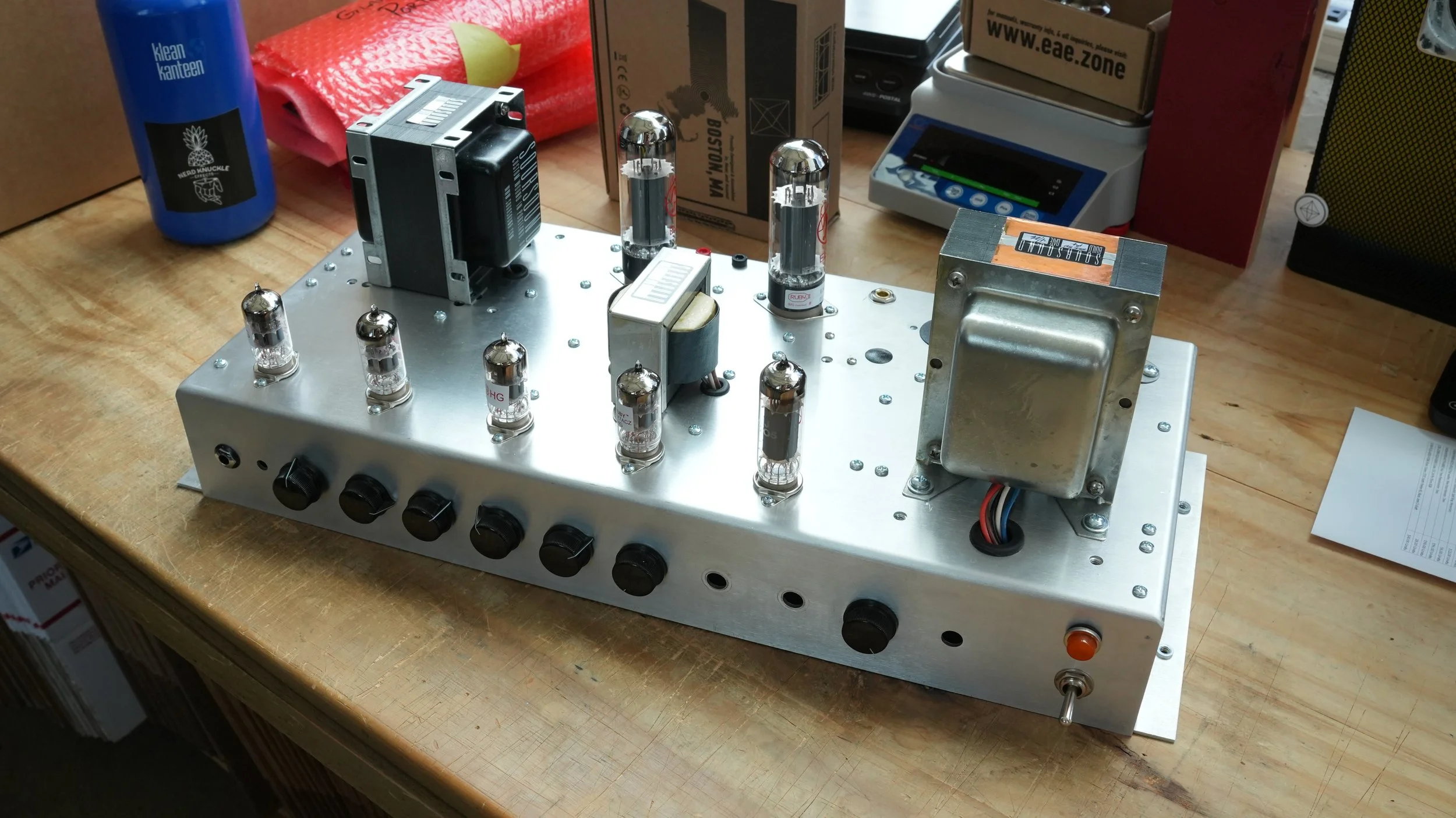
At this stage, I’m quite happy with the sound. The transients feel sturdy, and deep fundamentals are represented incredibly well. It reveals details in pedals that I don’t hear with most of our other amps. It’s not unforgiving, but it is precise.
What’s next? From here our goal is to try it with as many guitars, speakers, and pedals as possible. I am going to keep tweaking, and at some point we will have to decide if this is a cool one-off or if it’s something we actually want to make. (There’s also the question of cosmetics.) Commercial viability is a long way off, but if you’re interested at least drop me a line so I can gauge potential demand!
Anyway, I’ll add updates as they come. This thing is a project I’ve wanted to make for a long time so I’m enormously grateful to Alex and Bryan for helping make it happen!
Until then, I got a pedal design to finish!
Cheers,
John