Scattering
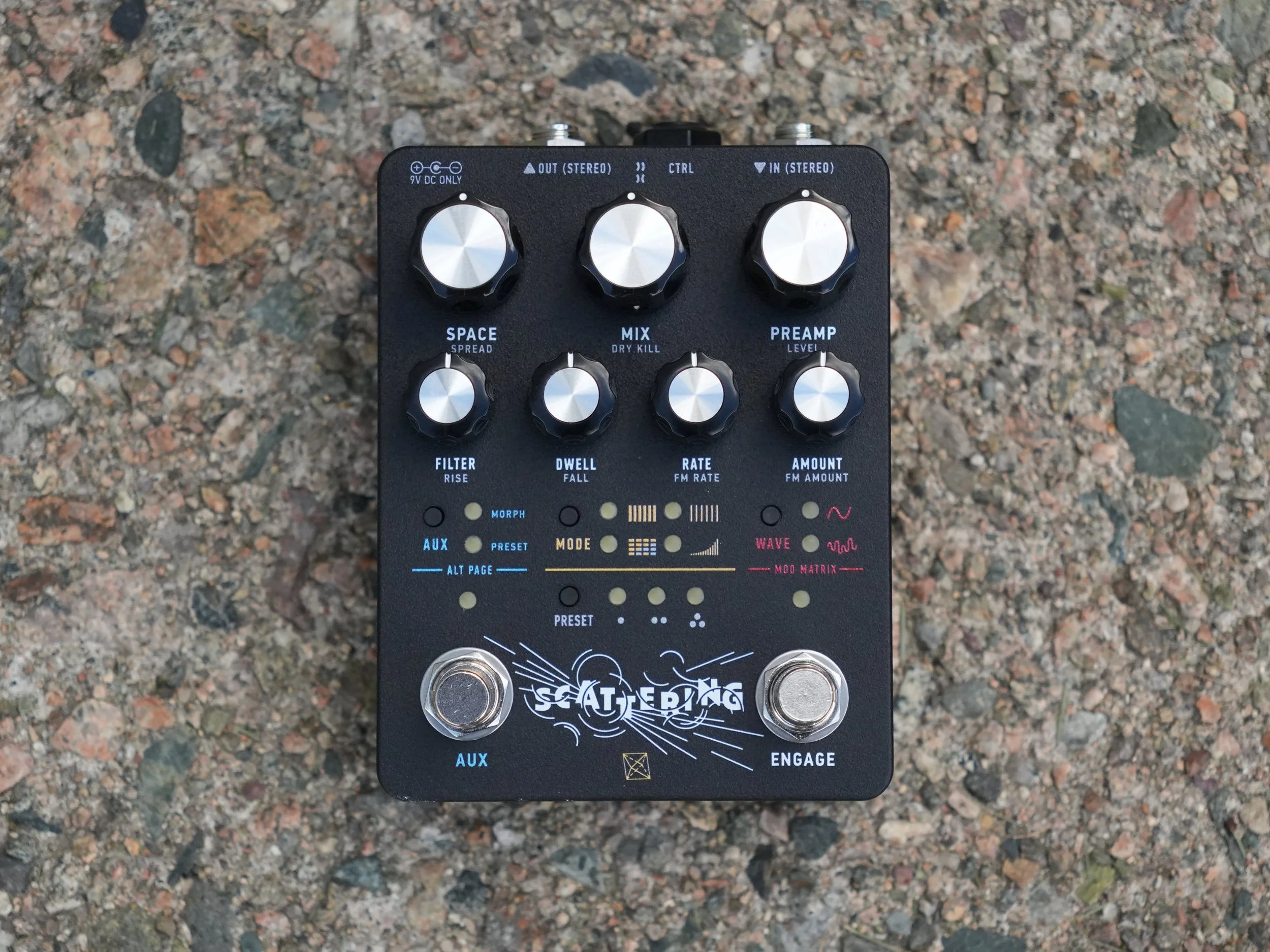
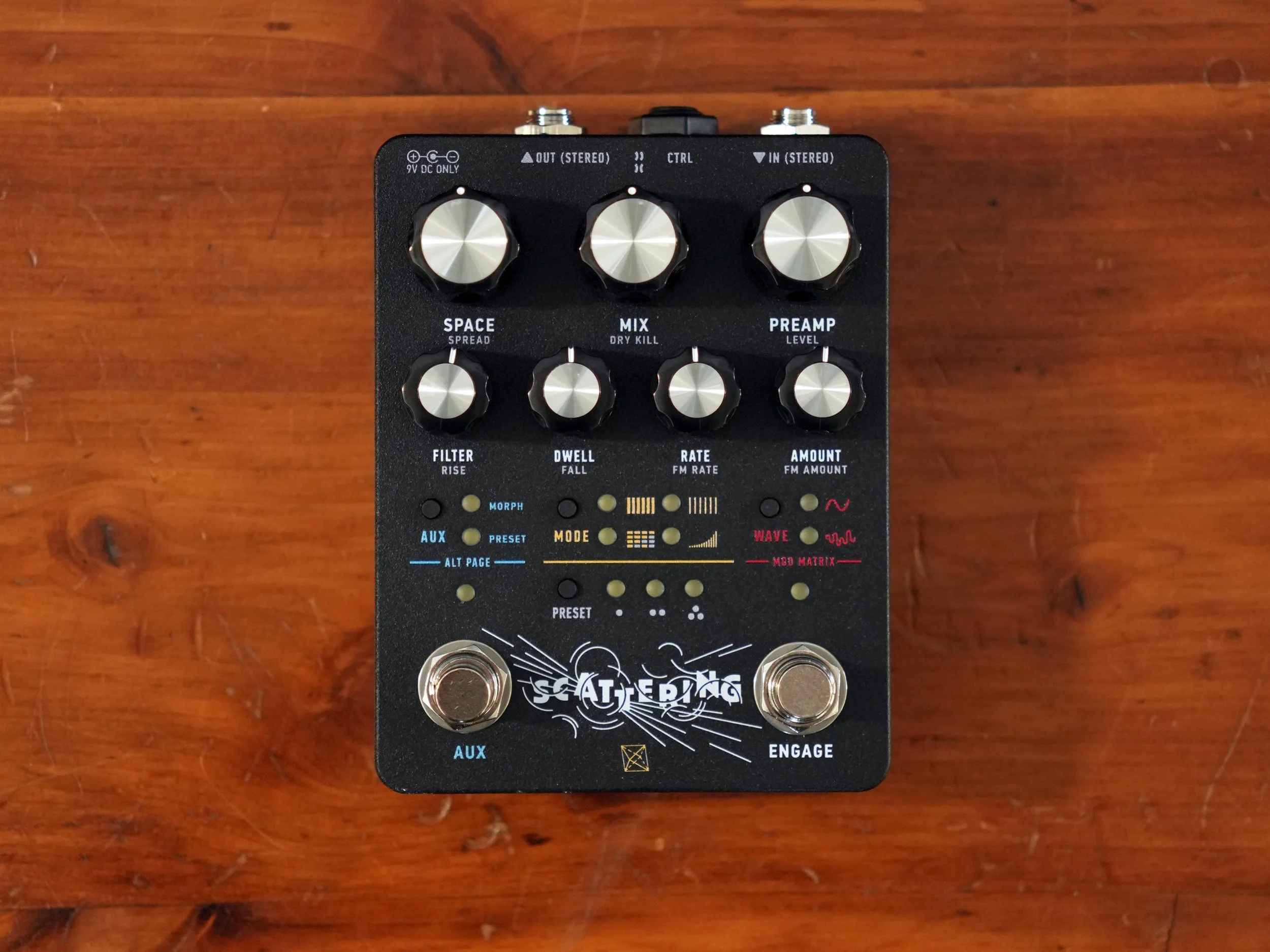
Scattering
Scattering is a stereo reverb built around networks of tapped delay lines.
Forsaking the diffuse atmospherics of traditional digital reverb, instead it creates a lively dance of fluttering echoes strewn into space.
Here the boundary between analog and digital is thin. The core timbre can be harsh and ringing, or murky and saturated. Four modes, each representing permutations of the lost MN3011 bucket brigade device, offer branching paths into proto-algorthmic realms.
Within, you can find all manner of textural reflections. But, far from just an ambient effect, Scattering is able to saturate, modulate, and spatialize with immediacy and practicality.
Building upon our analog/digital hybrid ecosystem, Scattering has a deep interface with presets, MIDI, assignable modulation, and extensive expressive control over all parameters. The I/O and analog/digital processing are true stereo—a first within our catalog.
Reverb gives our music a sense of space. We hope Scattering is a fun one to explore.
-
• Analog/digital hybrid signal processing (24 bit, variable sample rate) paired with analog filtering and emphasis, for low noise with a colorful character
• Full stereo signal path
• High headroom analog dry path and mixer
• Comprehensive digital control of every function using a 32-bit processor system that seamlessly integrates with the analog signal path.
• Performance-friendly expression morphing functionality with intelligent momentary/latching behavior and adjustable rise/fall times
• Full MIDI implementation (CCs and presets) for all parameters, analog and digital
• 16 preset slots: 3 via the front panel, the rest via MIDI
• CTRL jack for MIDI, expression, and CV input
• Multi-mode, assignable LFO with periodic and random waveforms
• Updatable firmware via MIDI Sysex messages
-
Size: 121mm × 94mm × 38mm (Hammond 1590BB2)
Bypass switching: Electronic bypass with buffered or Trails modes
Input impedance @ 1kHz: 1MΩ
Output impedance @ 1kHz: 1kΩ
Signal I/O: TRS stereo input and output
Power Input: 9VDC, 2.1mm center negative barrel, protected against reverse polarity and over-voltage up to 24V
Current Draw: 120mA typical, 200mA surge at startup
-
For complete details, check out the manual and the quick reference guide.
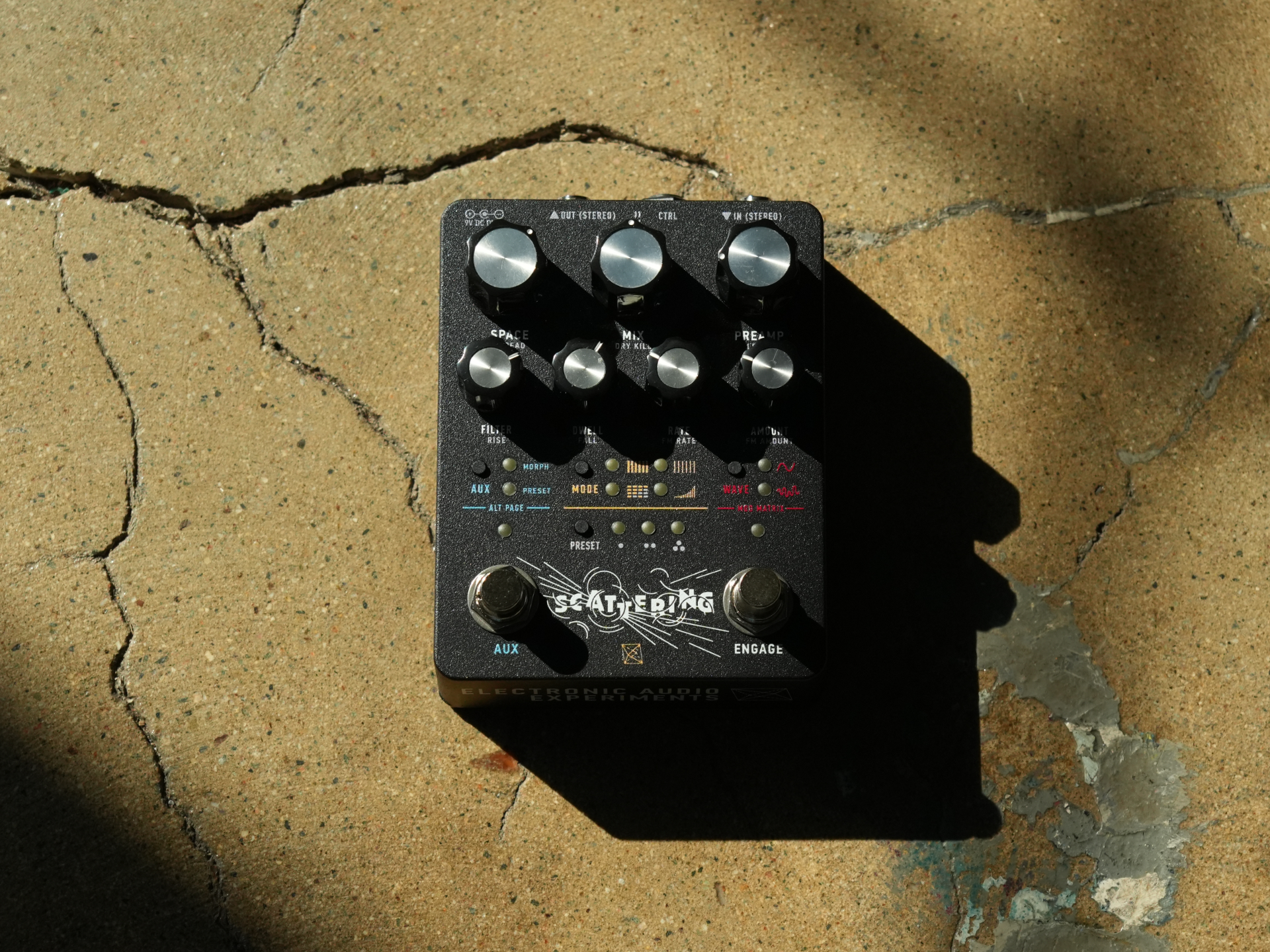
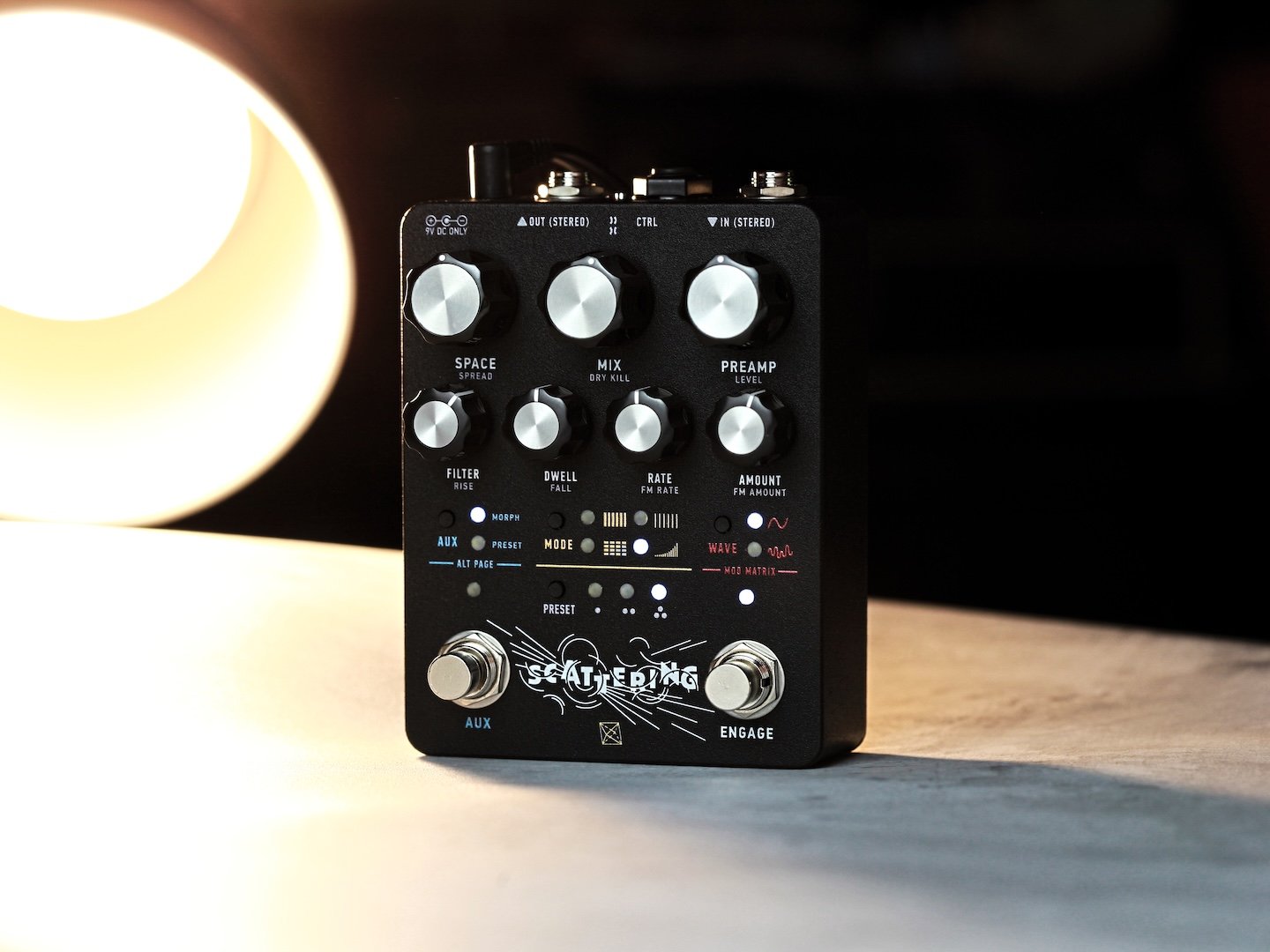
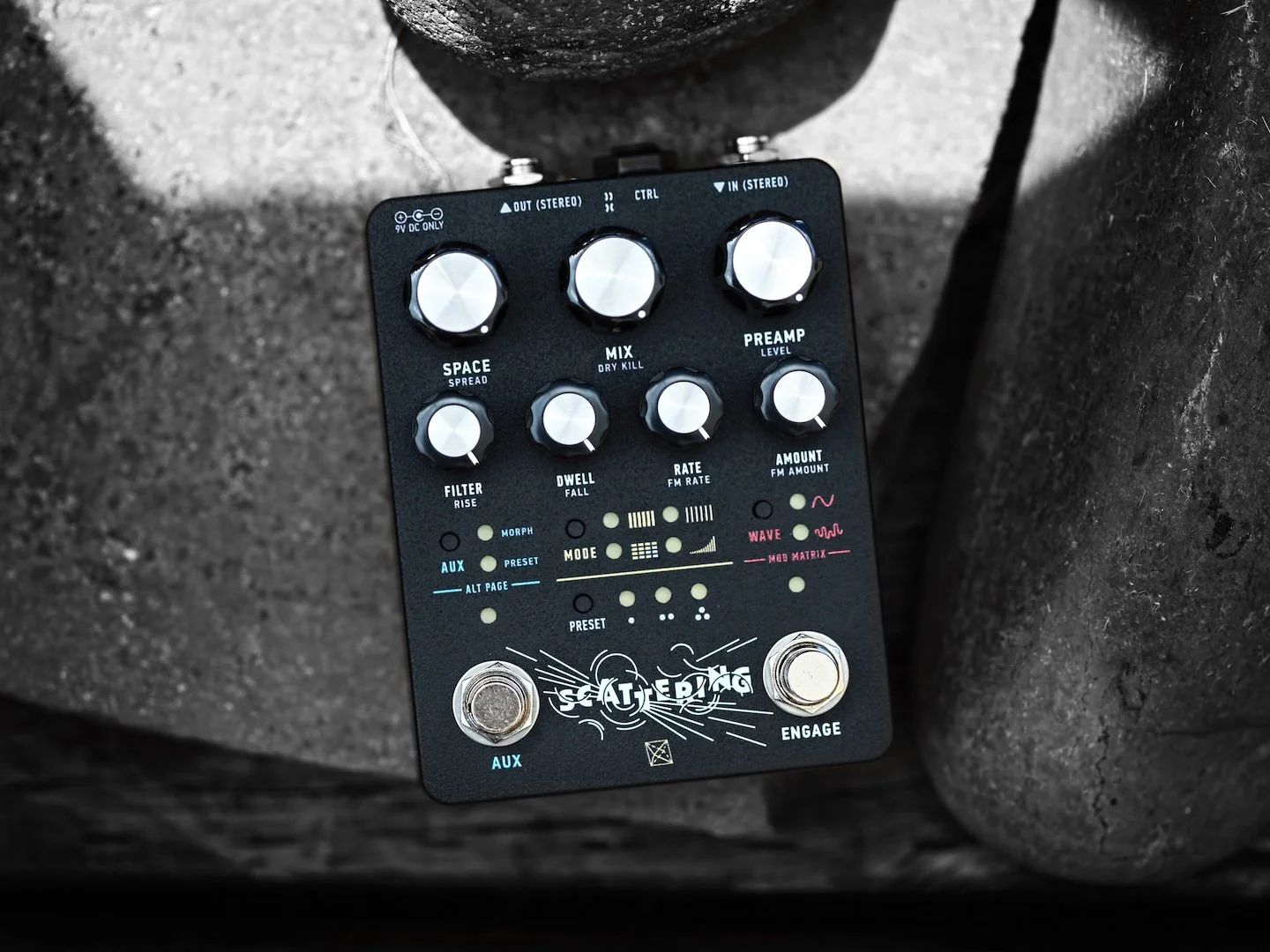
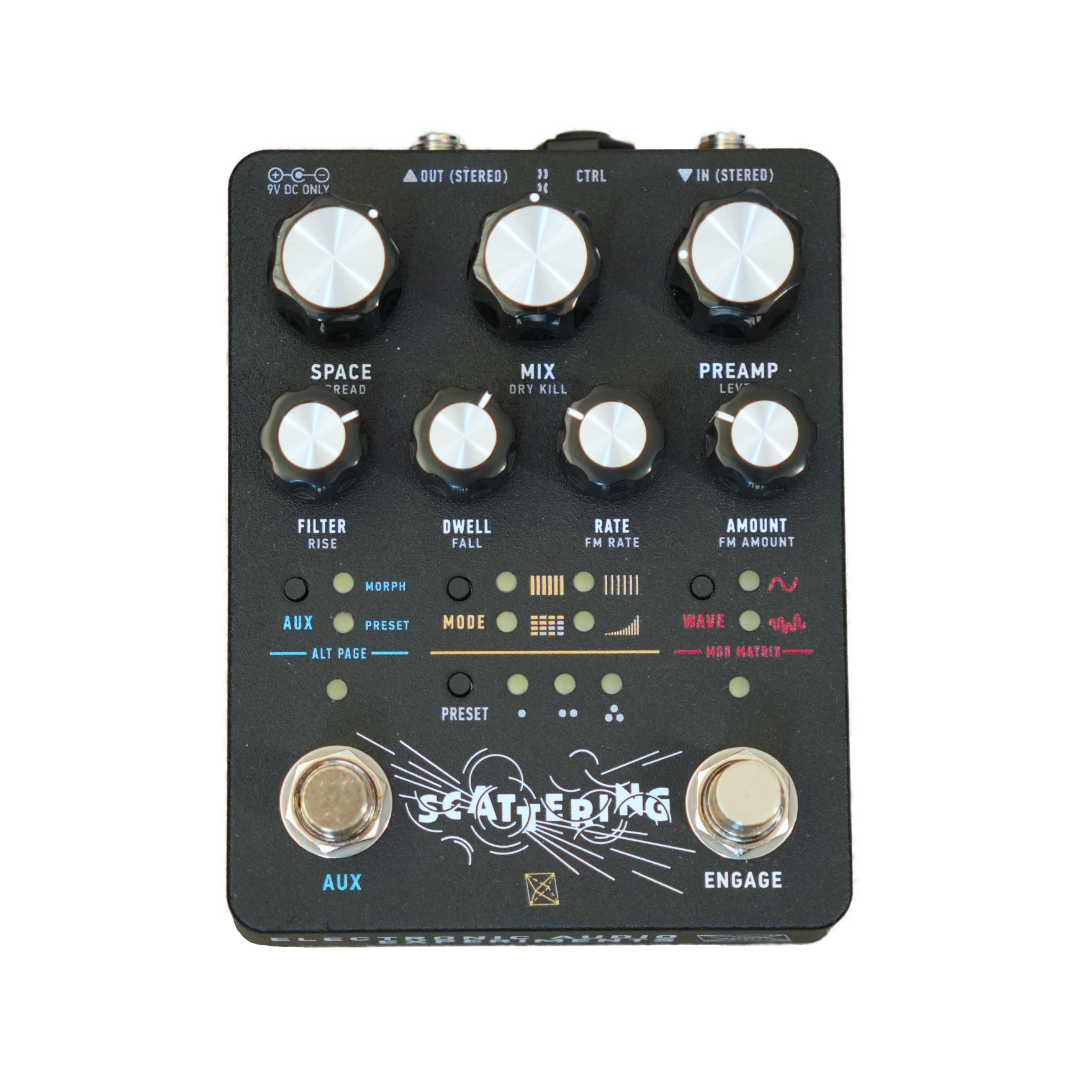
Space: Turn clockwise to increase the reverb time and separation of delay taps. Will produce artifacts at longer settings.
Mix: Analog VCA mixer, full dry to full wet
Preamp: Controls a stereo analog gain stage. Neutral and dynamic with plenty of headroom. Use to boost volume, add textural saturation, and overload the reverb.
Filter: Controls a stereo, analog, two-pole low pass filter at the reverb output.
Dwell: Feeds the reverb back onto itself. In some modes, high settings will oscillate.
LFO Rate/Amount: LFO controls; modulates Space by default
Mode Button: selects between four reverb modes based on the tap ratios of the MN3011.
Wave Button: selects the LFO waveform between periodic and random modes. Long press to access the Mod Matrix.
Engage Footswitch: activates the pedal. Long press to toggle trails/standard bypass modes.
Aux Footswitch: the footswitch behavior depends on the Aux button setting. In Morph mode, Aux will jump between two distinct knob settings with intelligent momentary/latching behavior. In Preset mode, Aux will scroll through the first three presets.
Aux Button: determines the behavior of the Aux footswitch. Long press to access alt functions, and press again to return to the panel.
-
Version 1 (August 2026)
Original release
-
V1.0 (August 2026)
original release
-
Standard: textured black with multicolor print
Additional Information
Sound Clips
All guitar tracks recorded in stereo with a Traynor YBA-1/Joe’s TL806/AEA N22 (left) and Fender Twin/Ohma Ribbon Mic (Right).
All bass tracks recorded with a Greathammer, a Peavey Booster 400, and a Barefaced Dually 2x15 with an Ohma Ribbon mic and a Franklin DI-20 blended together.